- Mon - Sat: 8.00 - 18.00
- +971 50 4726492
- +971 50 4630049
- 24/7 Hours Services available

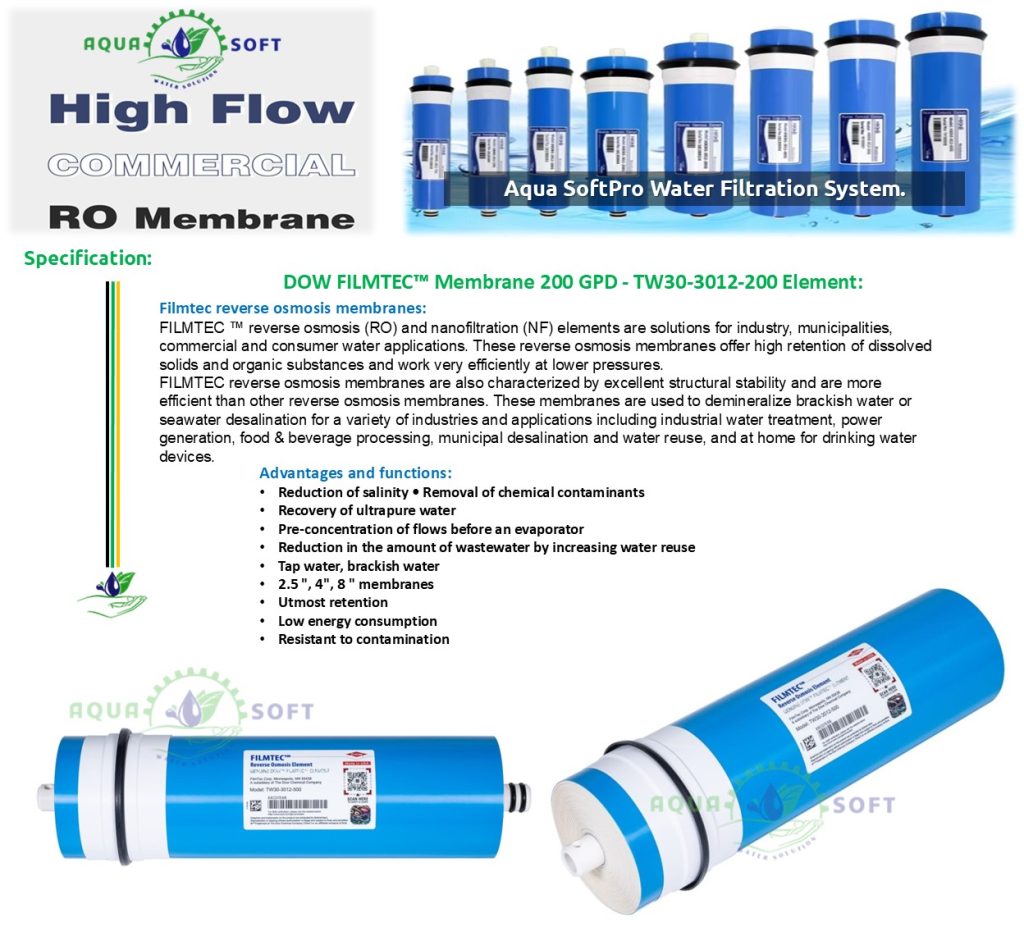
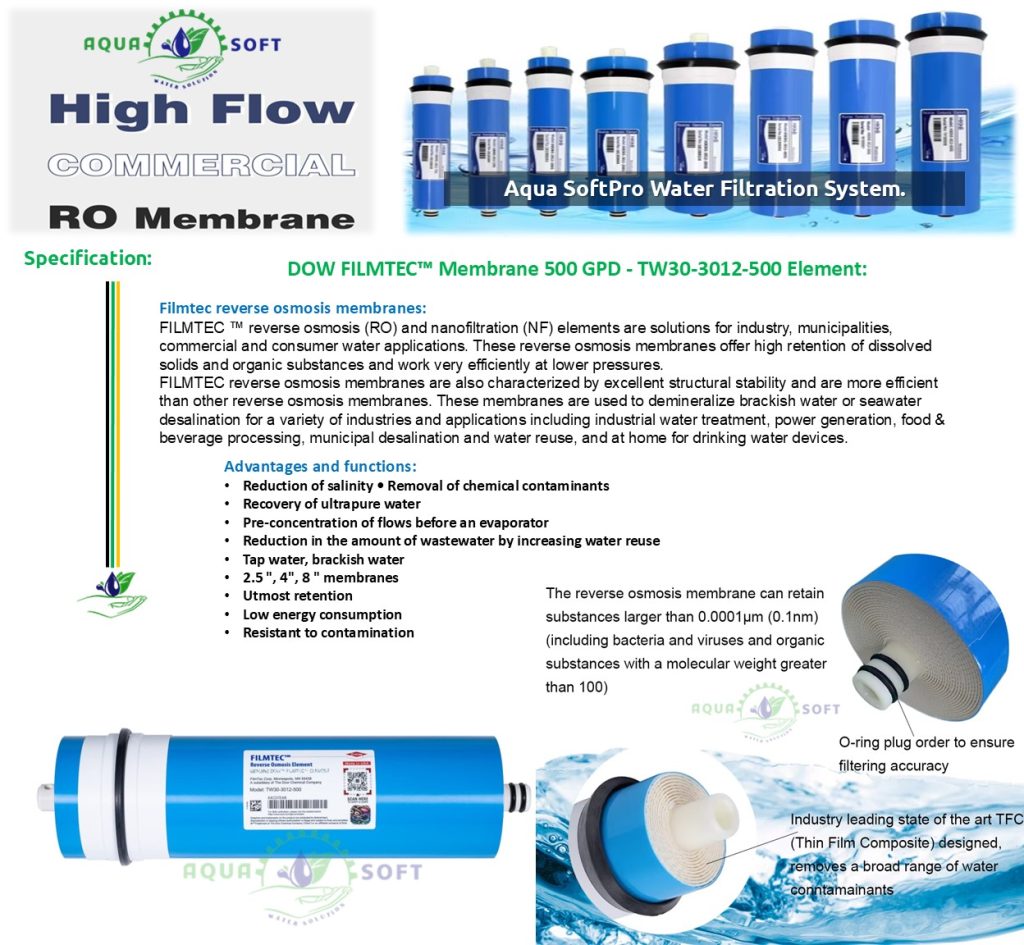
RO-MEMBRANES.
Water Treatment & Reverse Osmosis Membranes:
The use of reverse osmosis membranes in the water treatment industry is standardized practice, due to the requirement of filtration to take place in removing unwanted impurities from water. Membrane water treatment is done through the use of barriers that allow only specific substances to pass through the small pores of the membrane while not allowing other types of contaminants. There are a variety of membranes in use throughout the market which act as processes in treating groundwater,
surface water, and wastewater to a level that is acceptable for industries and especially consumption. It is a rapidly growing industry, as a result of the need to combat low quality water sources such as rivers, lakes, wells, streams, and the ocean, in order to provide more alternative methods in supplying healthy, safe, steady, and accessible water to the masses.
As per mentioned, there are different types of membranes which can be utilized for water treatment. The factors that necessitate which membrane would be more effective relies upon the types of contaminants existing in the water, and the desired water quality by the user.
The two most common type of membranes used in the industry are:
- Membrane Filtration (ultrafiltration, microfiltration) works by eliminating particles (mainly suspended solids) from water through operating under pressure.
- Reverse Osmosis/Nanofiltration Membranes that operates similarly in producing freshwater from the prevention of larger dissolved molecules from passing through the small pores of the permeable membrane, while allowing the pure water to flow through.
For a given facility, the appropriate and perhaps most reliable water purification process must be chosen based on particular operational conditions, functional characteristics, and economic variables (equity and O&M costs). Which is why a large percentage of available on the market for membrane processes are variations of standard and RO membrane technologies.
Even so, there are increasing numbers of water treatment systems that only contain membrane processes (membrane and/or integrated membrane). One successful application of membrane filtration is the upgrading of existing operating facilities. Through incorporating RO membrane technology, the device size (water flow) of the plant and the effluent consistency can be substantially improved at a relatively lower cost.
Find here a list of all the available membranes (models / part numbers)